
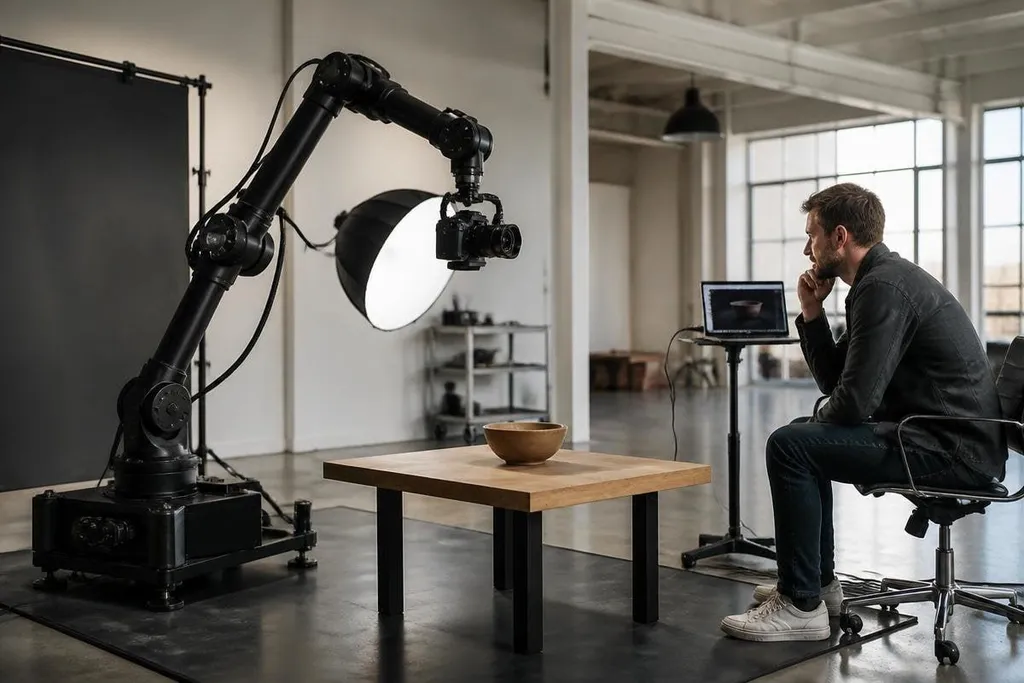
A photography robot can move a camera, repeat a shot, or work in a place that people cannot reach safely. Without a source-backed price, deployment record, or test result, the business case remains a set of possible routes rather than a proven market.
Quick read
- Repeated camera movement is the clearest starting point
- Remote operation may matter more than full autonomy
- Pricing, setup time, and image quality decide the sale
Where the work could start
The first buyers are likely to care about repeatable work. A robot that returns a camera to the same position can help with product images, property records, studio work, or fixed inspection views. The value comes from repeatable movement, not from the word “robot.”
That work still needs a person to set the shot, check the light, and approve the image.
A robot arm may move a camera through a planned path, while software triggers the shutter at set points. The setup could cut repeated manual movement, but only if the robot saves more time than it takes to install and check.
A second route is remote photography. Teleoperation means a person controls the robot from another place. This could suit dangerous sites, hard-to-reach structures, or live events where the camera needs to move without putting a camera operator in the same space.
The limit is clear: remote control still needs a trained operator, a stable connection, and a safe way to stop motion. A business selling this service would need to charge for the machine, the operator, travel, maintenance, and image delivery.
Four ways to make money
The hardware is only one part of the possible business. A company could sell the robot, rent access to it, or sell finished photography instead of equipment.
- Robot sales: Customers buy the arm, camera mount, control software, and safety hardware. This suits teams with repeat work and staff who can run the system.
- Hourly rental: A service company brings the robot to a studio or site, sets it up, and charges for use. The buyer avoids a large purchase but gets less control over scheduling.
- Managed photography: The customer pays for finished images. The provider owns the robot and handles setup, operation, file checks, and delivery.
- Remote capture: A customer requests a shot from a distant site. An operator runs the robot when the task needs a person in the loop.
The best option depends on how often the work repeats. A studio with daily product shots may have a reason to own equipment. A property company that needs occasional aerial or indoor images may prefer a service contract.
For a buyer weighing ownership against a service contract, dated robotics reports from Robot24.com can show whether a photography robot has moved beyond a demo and into paid work. That record gives the next buying check a clear starting point: the task, price, and support around the robot.
A practical buying check
Image quality comes first. The camera must hold its position, repeat a path, and avoid vibration during exposure. A moving arm that produces soft images costs the buyer time instead of saving it.
Setup matters too. A system that needs a long calibration process may work in a fixed studio but fail as a mobile service. The buyer also needs to know who fixes the robot, how spare parts arrive, and what happens when the camera or control software stops working.
No verified evidence was supplied for a specific photography robot, so price, runtime, payload, reach, safety rating, and customer results remain unknown here. Those missing figures should be part of any purchase review, not replaced with broad claims about automation.
Use this list before testing a system or signing a service agreement:
- Define the repeated camera movement and its current labor cost.
- Record the image quality needed for the job, including sharpness and framing.
- Ask for an uncut demonstration of the full task, from setup to file delivery.
- Check the camera payload, arm reach, movement speed, and safety stop position.
- Price installation, operator time, repairs, software, and replacement parts.
- Set a clear result that would justify the purchase or service fee.
I'd wait for measured image results and a full cost sheet before buying a photography robot for routine work. The first viable business may sell completed images, while the hardware remains too hard to own.
That answer can change when a company publishes a real price, a named customer, and repeatable image data from paid jobs.